Understanding Multi-Modal Transportation in Modern Relocation Services
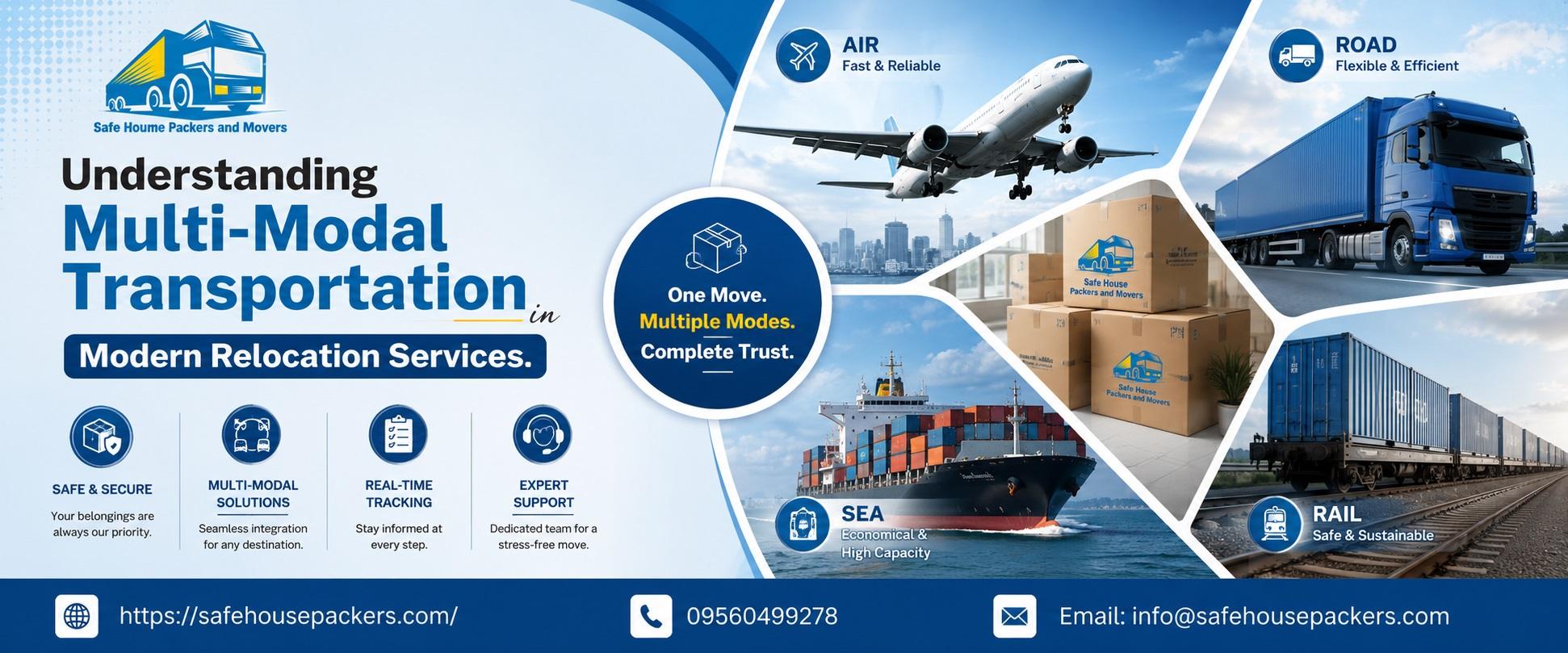
Moving house or shifting an office used to mean one truck, one driver, and a lot of fingers crossed. That's not how it works anymore. Today, a single relocation — especially if it's long-distance, interstate, or international — often travels through more than one mode of transport before it reaches your doorstep. This mix of road, rail, air, and sometimes water transport is called multi-modal transportation, and it's quietly becoming the backbone of how packers and movers operate in India.
Let's break down what this actually means, why it matters, and how it's changing the relocation experience for ordinary households and businesses.
What Exactly Is Multi-Modal Transportation?
In simple words, multi-modal transportation means moving your goods using more than one type of vehicle or route under a single plan. For example, your furniture might travel by truck from your home to a logistics hub, then go by rail to another city, and finally complete the last few kilometres by a smaller local vehicle.
This isn't a new idea globally, but in India, it has picked up real momentum recently. The government passed rules years ago to support this kind of mixed transport, and now infrastructure is finally catching up with that vision.
Why Relocation Companies Are Shifting to Multi-Modal Systems
Rising Freight Volumes Are Forcing a Rethink
India's freight movement is expected to touch close to 28 billion tonnes by 2047, according to a joint study by the Confederation of Indian Industry and Knight Frank India, reported on Cargo Connect. That's a massive number, and it means roads alone simply cannot carry that load efficiently. Relocation and logistics companies, including names like Safe House Packers and Movers, are increasingly building their networks around multiple transport modes instead of relying only on trucks.
Cost Savings That Are Hard to Ignore
Here's a number worth remembering: multimodal logistics parks connected with Dedicated Freight Corridors can cut door-to-door freight costs by as much as 43% compared to regular road-only transport, as detailed in the same Cargo Connect report. For a household shifting across states, or a company relocating an entire office, that kind of saving genuinely changes the final bill.
Rail Is Quietly Becoming the Backbone
A lot of people don't realise how much rail freight has grown. Since 2014, an extra 2,672 million tonnes of freight have been shifted from road to rail in India, saving around 143.3 million tonnes of carbon dioxide emissions in the process, according to data published by Indian Infrastructure. Rail transport also costs less than half of road transport and produces close to 90% less carbon, per the same report. This is one reason long-distance relocation services try to use rail wherever the route allows it.
The Infrastructure Push Behind the Scenes
Government Policy Is Doing the Heavy Lifting
The National Logistics Policy and the PM Gati Shakti plan have brought 16 different ministries onto one coordinated platform, aiming for faster project approvals and better-connected transport corridors, as explained by IMARC Group in its market analysis. This matters more than it sounds — it means roads, railways, ports, and warehouses are finally being planned together instead of separately.
Logistics Costs Are Actually Falling
For years, India's logistics costs hovered around 13–14% of GDP, which was high compared to global standards. That number has now come down to roughly 7.9–10.7% of GDP, according to industry officials speaking at Transport Logistic India 2026, covered by GetTransport, and confirmed separately in Invest India's own infrastructure report at investindia.gov.in. Lower logistics cost across the country eventually mean lower shifting charges for the end customer too.
Multimodal Logistics Parks Are Multiplying
India may need around 215 to 216 large multimodal logistics parks by 2047 to handle this freight growth, per the same study covered by Cargo Connect. These parks act like switching points — your goods can move smoothly from a truck to a train to another truck without long delays or repeated unloading.
Cargo Terminals Are Expanding Fast
As of January 2026, Indian Railways had approved 306 Gati Shakti Cargo Terminals, with 118 already up and running, adding close to 192 million tonnes of handling capacity every year, as reported by Indian Infrastructure. This is exactly the kind of infrastructure that makes mixed-mode relocation possible at scale.
Even Waterways Are Joining the Mix
Under the Maritime Amrit Kaal Vision, India is aiming to raise inland waterway transport's share from just 2% to 5%, with traffic expected to cross 200 million tonnes by 2030, according to the same coverage on Indian Infrastructure. While this mostly affects bulk cargo for now, coastal cities are slowly seeing more relocation-related shipments use this route, too.
Road Still Carries the Final Stretch
Even with rail and water gaining ground, India had 391.07 million registered vehicles as of March 2025, and trucks still dominate last-mile and regional freight movement, according to a NITI Aayog sectoral report available at niti.gov.in. So multi-modal doesn't mean roads disappear — it means roads handle the parts they're genuinely best at, like the first and last mile.
How This Affects Your Household or Office Shift
Faster Delivery Timelines
When a relocation company plans your move using a mix of rail for the long stretch and road for the short stretch, your goods often arrive faster than a single truck doing the entire 1,500 km journey at 250-300 km a day, which is roughly the average distance Indian trucks cover daily, as noted in a scholarly review hosted on ProQuest.
Better Safety for Fragile Items
Rail transport involves fewer jerks and stops compared to long road stretches with multiple checkpoints. For office relocations involving computers, servers, or delicate equipment, this reduces breakage risk significantly.
More Transparent Pricing
As digital tracking spreads across rail, road, and warehousing systems together, customers get clearer visibility into where their shipment is and what it's costing at each stage. Companies like Safe House Packers and Movers Mayur Vihar are aligning with this shift by using tech-enabled tracking across the journey, not just on the road leg.
Choosing the Right Mover for a Multi-Modal Shift
Ask About Their Network, Not Just Their Trucks
A good relocation partner should be able to explain whether your shift will use rail, road, or a combination — and why. If a company can only talk about trucks, they may not be set up for the kind of efficient, cost-saving multimodal approach that's becoming standard.
Check Their Handling at Transfer Points
The riskiest part of multimodal relocation is the switch — when goods move from one transport mode to another. Ask how they pack and secure items during these transfers.
Look for Real Infrastructure Partnerships
Companies that work with rail cargo terminals, organised warehousing, or established logistics parks tend to offer more reliable timelines than those depending purely on independent truck operators, especially since over 75% of road freight capacity in India still sits with small operators owning fewer than five trucks, as highlighted by IMARC Group.
Final Thoughts
Multi-modal transportation isn't just an industry buzzword — it's a real, measurable shift happening in how India moves goods, including household and office relocations. With falling logistics costs, expanding rail capacity, and government-backed infrastructure projects, the relocation experience is becoming faster, cheaper, and more predictable. Whether you're shifting a two-bedroom flat or an entire office floor, working with a mover that understands this multimodal landscape — like Safe House Packers and Movers Rohini — can make the difference between a stressful move and a smooth one. As more multimodal logistics parks and freight corridors come online in the next few years, expect this approach to become the new normal for relocation services across the country, not the exception.
