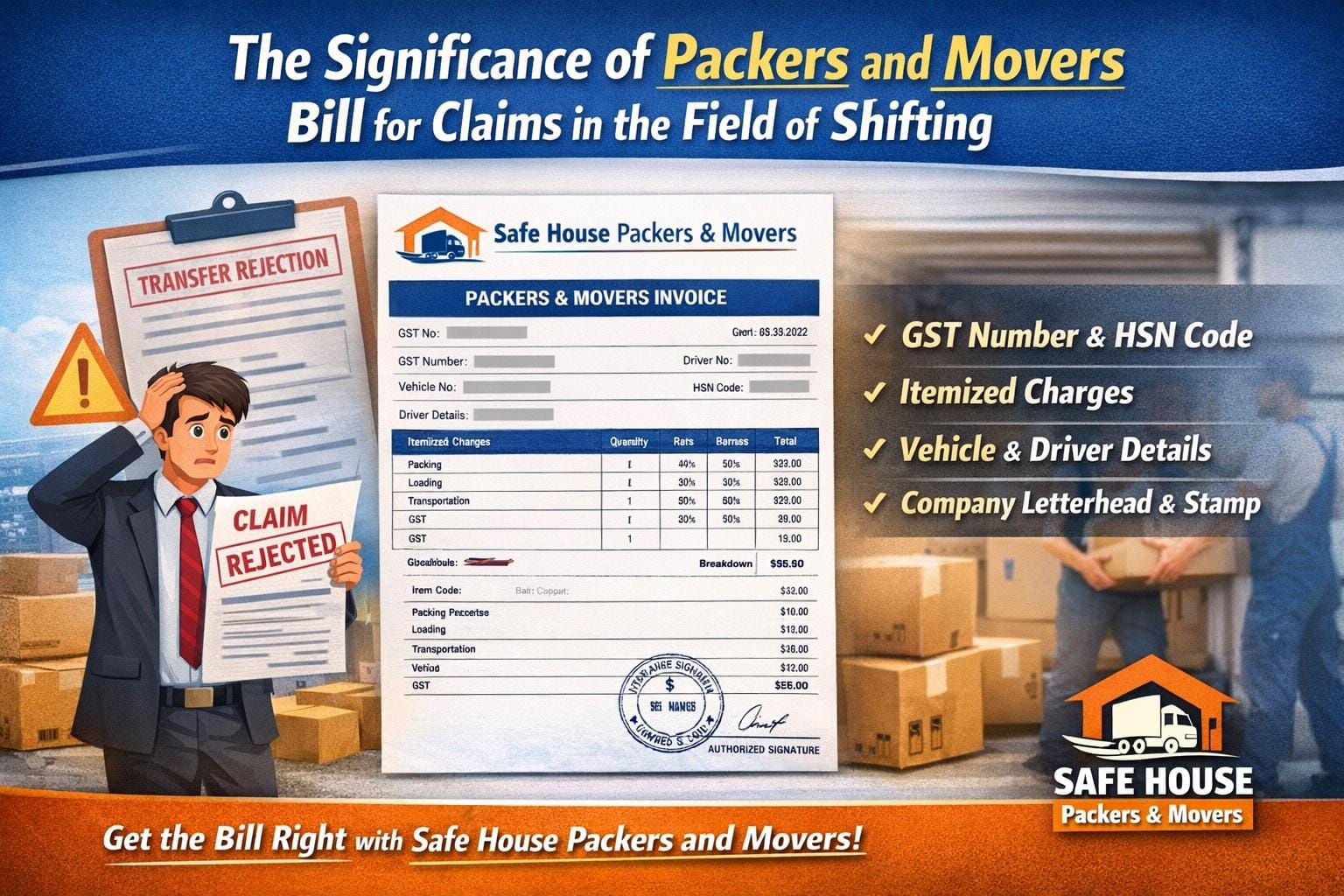
Packers and Movers Bill for Claims
You finally got the transfer letter you were waiting for. Your company is moving you to a new city, and the best part — they are paying for the relocation. You hire a moving company, pay the bill, and submit the papers to HR. A week later, you get a message saying your claim has been rejected.
Not because you did anything wrong. Not because you were late. Simply because the bill was not in the right format.
This happens to more people than you would think. And it is entirely avoidable — if you know what a proper packers and movers bill looks like and why it matters.
What Is a Packers and Movers Bill for Claim?
When a moving company shifts your home or office, they charge you for the service. At the end of the job, they give you a bill — also called an invoice — that shows what was done and how much it cost.
A bill for claim is the same invoice, but prepared in a way that your company, bank, or government department will officially accept for reimbursement. It is not just a receipt. It is a document with a specific structure that finance departments look for before approving any payment.
Why Does the Bill Format Matter So Much?
Think of it like an exam answer sheet. You may know all the right answers, but if you write them on the wrong paper or skip the question numbers, the examiner cannot process them.
A company’s accounts team works the same way. They follow rules. If a bill is missing a GST number, or does not show what each charge is for, or has no vehicle details, it cannot be approved. It does not matter how much you paid or how smoothly the move went.
The wrong bill means your company will not cover the costs of shifting.
What a Proper Bill Must Include
A packers and movers bill is the official invoice your shifting company gives you after completing your move. It is a record of everything that was done and everything that was charged.
A proper bill from a good moving company shows:
GST Number and Breakdown — The bill must show the moving company’s GST registration number and the exact tax applied. Without this, no finance department will touch it.
Itemised Charges — Every cost must appear as a separate line. Packing material charges, labour charges, transport charges, loading charges, and unloading charges — each one listed on its own. A single total amount tells the accounts team nothing.
Vehicle Registration Number — The truck that carried your goods must be identified on the bill. This is a standard requirement for most corporate and government claims.
Driver Details — Name and licence number of the driver who handled the transport.
HSN Code — This is a product classification code under GST that identifies the type of service provided. Moving companies that know their work will always include this.
Packing and Moving List — A list of the items that were packed and shifted. This protects you as much as it satisfies the accounts team.
Company Letterhead and Stamp — The bill must come on the moving company’s official letterhead with their stamp and authorised signature.
What Happens When the Bill Is Wrong
A rejected reimbursement claim means you will have to pay for the move yourself. That is often tens of thousands of rupees coming out of your own salary.
Beyond the money, a rejected claim means going back to the moving company to request a corrected bill, which many smaller or unverified companies cannot provide. They do not have a GST registration. They cannot produce vehicle documents. They have no proper company letterhead. They took your money and disappeared.
This is one of the biggest reasons people are advised to hire IBA-approved movers. The IBA — Indian Banks’ Association — only approves companies that maintain proper documentation standards. When you hire an IBA-approved mover, the bill they provide is already in the format required by banks, government departments, and corporate HR teams.
The Bill Protects You in Other Ways Too
A detailed bill is not just for reimbursement. If something is damaged during the move and you need to file an insurance claim, the itemised bill serves as your supporting document. It shows what was moved, how much the service cost, and who was responsible for the goods in transit.
A bill also holds the moving company accountable. Once a price is written down and signed, it cannot be brought back later, and the price cannot be increased.
Choose a Mover Who Gets the Bill Right
Safe House Packers and Movers issues fully GST-compliant bills for every job — with itemised charges, vehicle details, HSN codes, and all documentation required for reimbursement claims. Hundreds of employees on company transfers have had their claims approved on the first submission, with no correction requests.
A good move starts with the right company. A successful claim starts with the right bill.
