Eco-Friendly Moving in 2026
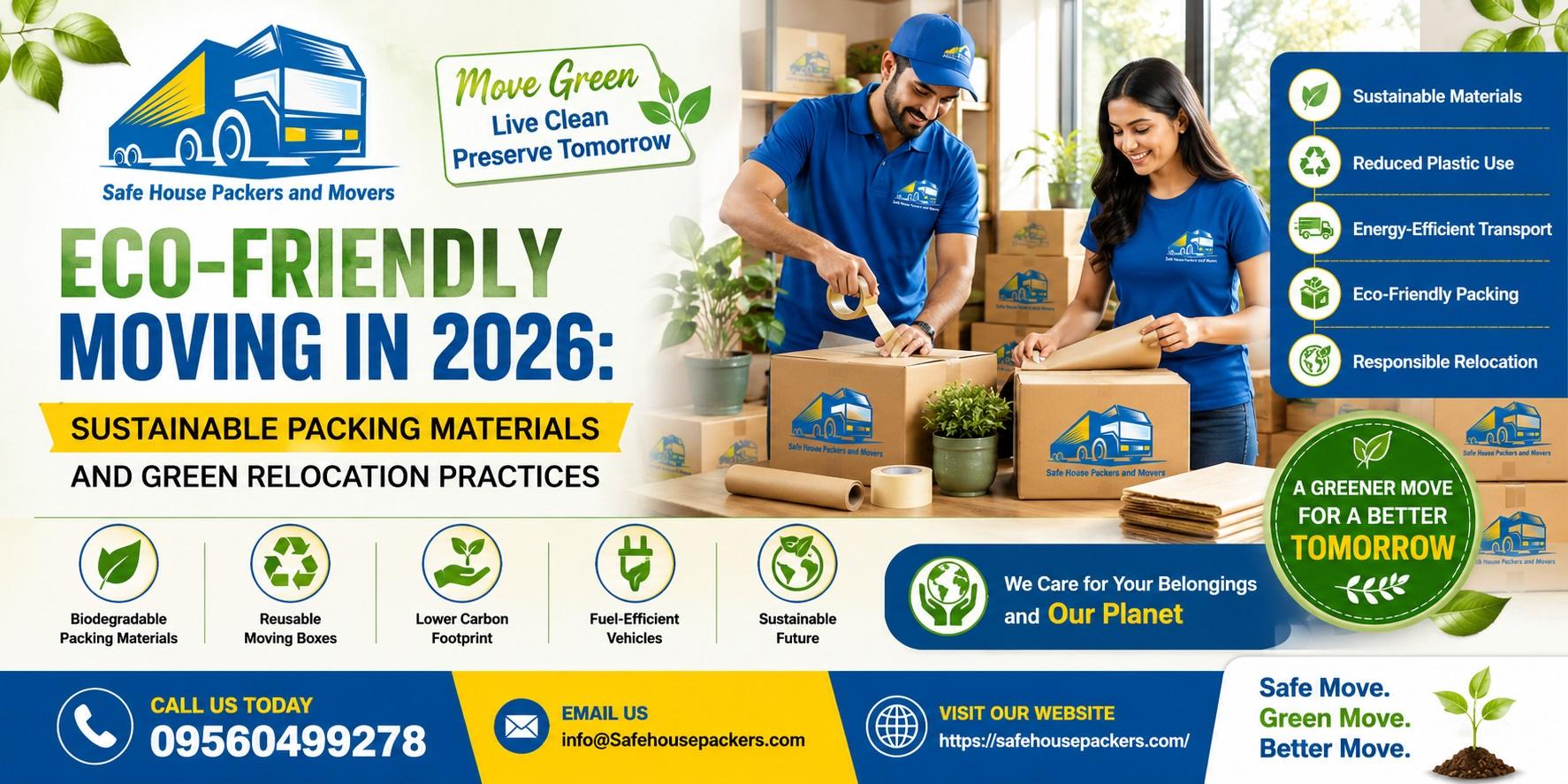
Moving to a new home or office is always a big deal. There is excitement, there is planning, and there is a lot of packing. But here is something most people never stop to think about — all those bubble wraps, thermocol sheets, and plastic tapes end up in a landfill once your move is done.
In 2026, that is no longer okay.
India is waking up to its environmental responsibility, and the moving industry is right in the middle of this change. Customers often ask harder questions: Is your vehicle fuel-efficient? Do you use recyclable packing materials? Can you reduce the waste from my move?
If you are planning a household or office shift this year, this guide will help you understand what eco-friendly moving actually means, which green materials work best, and how smart relocation choices can make a real difference for the planet — without making things harder for you.
Why Eco-Friendly Moving Matters More Than Ever in India
Let's start with the numbers, because they tell a story that is hard to ignore.
India is now the world's largest plastic polluter, generating approximately 9.3 million tonnes of plastic waste every year — accounting for nearly one-fifth of global plastic pollution. A large share of this comes from packaging materials used in e-commerce, logistics, and relocation services.
The India Sustainable Packaging Market reached a value of USD 10,226 million in 2025 and is projected to grow to USD 17,732 million by 2034, driven by rising consumer awareness and stricter government regulations. That growth shows people are paying attention.
Meanwhile, the Indian government's Plastic Waste Management Amendment Rules (2025) now require QR code traceability on all plastic packaging and mandate that brands include at least 30% recycled content in rigid plastics. These are not suggestions — they are legal requirements. (Ministry of Environment, Forest and Climate Change)
Then there is India's logistics sector itself. According to IMARC Group, India's logistics market was valued at USD 243.82 billion in 2025 and is set to grow at a CAGR of 6.48% through 2034. Transportation is a key driver of carbon emissions in this sector, and moving companies are under increasing pressure to go greener.
India's biodegradable packaging market, valued at USD 3.09 billion, is growing fast as businesses and consumers shift away from conventional plastic alternatives. The opportunity to choose better is real and available right now.
Every household or office that chooses a greener way to move is contributing to a cleaner future. It might feel small, but at scale, it matters enormously.
The Hidden Environmental Cost of a Traditional Move
Before we talk about solutions, let us understand the problem clearly.
A typical household shifting in India involves:
- Bubble wrap made from non-recyclable plastic
- Thermocol (Styrofoam) sheets that take hundreds of years to break down
- Single-use cardboard boxes that are rarely reused
- Plastic packing tape applied generously across everything
- Diesel-powered trucks running long distances
Most of this material gets thrown away after the move. The boxes get crushed and discarded. The bubble wrap ends up in landfills. The thermocol is almost impossible to recycle in India's current infrastructure.
According to the Central Pollution Control Board (CPCB), India generates approximately 10,689 tonnes of plastic waste every single day. The moving and logistics sector plays a direct role in that number.
This is why companies like Safe House Packers and Movers are now making a conscious shift — rethinking every material used in the packing process and every vehicle deployed for transportation.
Sustainable Packing Materials: What to Use Instead
The good news is that eco-friendly alternatives exist for almost every traditional packing material. Let's walk through the best options available in India today.
1. Recycled and Corrugated Cardboard Boxes
Standard single-use cardboard boxes are already much better than plastic crates — but recycled corrugated boxes are even better. These boxes are made from recovered paper and can be reused multiple times.
India's paper packaging market is booming. According to IBEF (India Brand Equity Foundation), nearly three-fourths of India's paper production already comes from recovered paper and recycled fibre. Choosing boxes made from recycled cardboard keeps you squarely within the circular economy.
When you are done with your move, flatten and return these boxes to the moving company or a local kabadiwala for recycling. Nothing goes to waste.
2. Biodegradable Packing Peanuts
Traditional thermocol peanuts are a nightmare for the environment. Biodegradable packing peanuts made from cornstarch or wheat starch are now available in India. They dissolve in water and break down naturally in soil.
They are lighter, just as protective, and completely non-toxic.
3. Newspaper and Brown Paper Wrapping
This one costs almost nothing and works beautifully for wrapping plates, glasses, and fragile items. Old newspapers and brown kraft paper are excellent cushioning materials. They are biodegradable, widely available, and free in most households.
Keep your old magazines and newspapers instead of throwing them away. Your movers can use them for wrapping.
4. Fabric and Cloth Wrapping
A growing trend in the moving industry is using old bedsheets, towels, and cotton cloth to wrap furniture and delicate items. This replaces bubble wrap entirely for certain categories.
Several professional movers now offer reusable moving blankets made from recycled fabric. These blankets protect furniture during transit and are used move after move, dramatically reducing waste.
5. Plant-Based or Water-Activated Tape
Regular plastic packing tape cannot be recycled. Water-activated tape, made from paper, is fully recyclable and bonds strongly to cardboard. It is now available from several Indian suppliers and works just as well.
6. Bamboo-Based Packaging
Bamboo-based containers and dividers are gaining traction in India for packing kitchenware, crockery, and electronics. Bamboo grows back fast, does not require pesticides, and biodegrades within months rather than centuries.
Green Relocation Practices Beyond Packing
Choosing the right materials is only half the picture. How your move is actually executed matters just as much.
Consolidate Your Load
The fewer trips, the lower the carbon footprint. A well-planned move that fits everything into one or two loads is far greener than multiple half-empty trips across the city. A professional company like Safe House Packers and Movers Kirti Nagar will use inventory planning to maximise truck capacity and minimise fuel consumption.
Choose Fuel-Efficient or EV-Enabled Vehicles
India is actively expanding its electric vehicle (EV) infrastructure for logistics. According to S&P Global, India plans to add 25,000 to 35,000 public EV charging stations in 2025 alone, with a target of 100,000 to 150,000 by 2030.
Modern moving companies are adopting AI-powered route optimisation, which can cut fuel use by up to 25–30% per trip. This means fewer emissions and lower fuel costs — a win for both the customer and the planet.
Ask your moving company whether they use GPS-routed vehicles or offer EV-assisted fleet options for local shifting.
Donate Before You Move
Every item you do not move is one less thing to pack. Before your relocation, go through your belongings and set aside clothes, furniture, appliances, and books that can be donated to NGOs, schools, or neighbourhood groups.
This reduces the volume of your move, which directly cuts down on packing material usage and truck space needed.
Opt for Digital Documentation
Avoid printing inventories, contracts, and receipts. A good professional moving company will provide all documentation digitally — reducing paper use right from the planning stage.
Use Minimal Plastic Tape
Work with your moving company to reduce tape usage. Properly folded cardboard boxes may not need tape at all if packed correctly. When tape is necessary, opt for paper-based alternatives.
What to Ask Your Moving Company Before Booking
Not every company claiming to be "eco-friendly" actually follows through. Here are practical questions to ask before you hire anyone for your relocation:
- Do you use recycled or biodegradable packing materials?
- Do you offer reusable moving blankets instead of bubble wrap?
- Are your vehicles GPS-routed to reduce fuel consumption?
- What happens to packing waste after the move — do you take it back?
- Do you provide digital contracts and invoices?
A company that can answer these questions clearly is taking sustainability seriously.
Safe House Packers and Movers Saket has been among the movers in India that are beginning to answer these questions with confidence, integrating green packing norms into their standard service offerings.
India's Policy Push for Greener Logistics and Packaging
The Indian government is not leaving this to chance. Several important regulations are shaping how businesses — including moving companies — operate.
- The Plastic Waste Management Rules 2025 mandate recycled content in packaging and require QR code traceability on plastic products. (MoEFCC)
- The Extended Producer Responsibility (EPR) guidelines for paper packaging became effective from April 2026, requiring producers and brand owners to meet phased recycling targets. (IBEF)
- India's bioplastics market, valued at Rs. 4,069 crore (USD 457 million) in FY25, is projected to grow to Rs. 32,500 crore (USD 3.65 billion) by FY35 at a CAGR of 23%, according to IBEF's bio-packaging industry report. This explosive growth is being driven by both regulation and market demand.
- India jumped from 44th to 38th position in the World Bank's Logistics Performance Index between 2018 and 2023, partly on the strength of digitised customs and greener supply chain practices. (3SC Solution)
These are not distant policy goals. They are actively reshaping how relocation and logistics companies in India do business today.
A Simple Green Moving Checklist for 2026
Before you book your next move, run through this quick checklist:
Planning Stage
- Audit your belongings — donate or sell what you do not need
- Request eco-friendly packing from your moving company
- Ask about digital inventory and documentation
Packing Stage
- Use recycled cardboard boxes where possible
- Replace bubble wrap with newspaper, cloth, or biodegradable alternatives
- Use water-activated or paper tape instead of plastic tape
Moving Day
- Confirm vehicle is GPS-routed for efficiency
- Ensure one consolidated trip rather than multiple runs
- Photograph and document the condition of items digitally
After the Move
- Return packing boxes to the mover for reuse
- Dispose of any remaining material at a recycling point
- Provide feedback to your moving company on sustainability practices
Final Thoughts
Moving is stressful enough without having to feel guilty about the environmental impact. But the truth is, with a little planning and the right moving partner, a green move is just as easy — and often more organised — than a traditional one.
India is generating millions of tonnes of plastic waste every year. The logistics sector is one of the biggest contributors. But it is also one of the sectors where change is happening fastest — driven by smarter regulations, a growing market for sustainable materials, and companies that genuinely care.
When you choose a mover that shares these values, you are not just shifting your home. You are helping shift the culture.
Safe House Packers and Movers Mahipalpur represents the kind of professional service that is moving in this direction — combining reliable relocation with a responsible approach to how we pack, transport, and manage waste.
In 2026, an eco-friendly move is not a luxury. It is the standard we should all expect.
